
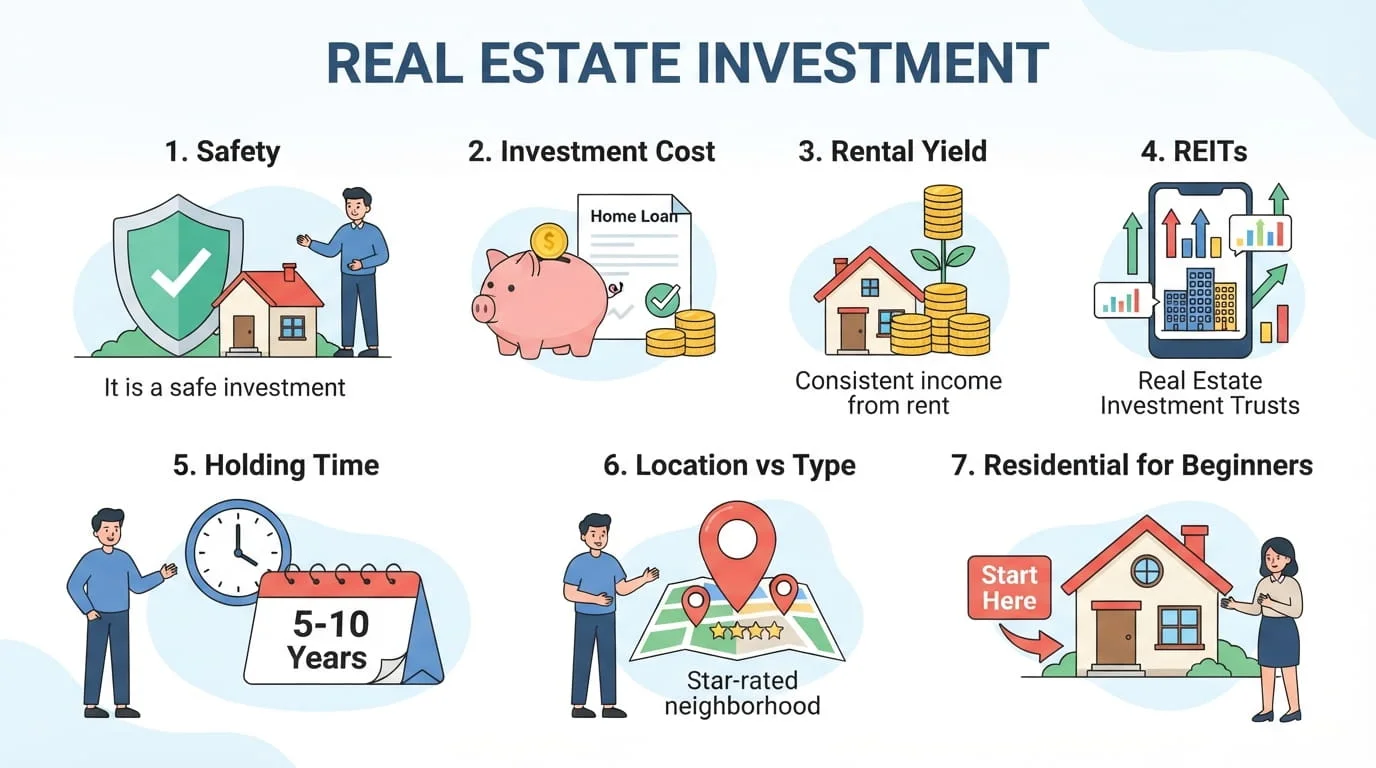

Is real estate a good investment? This question is common among beginners. Many people want to invest their money. They want to keep it safe. They also want it to grow. Real estate is one way to do this. Real estate means land, houses, flats, and shops.
But real estate is not the same for everyone. There are many types of property. Some types are good for one person. Some types are good for another person. This guide will use very simple words. It will help you understand real estate investment. It will help you choose the right property in 2026.
Why Real Estate Is Still a Strong Investment
Yes, real estate is a good investment. It can grow in value and also give rent every month. Not many investments can do both.
Here are simple reasons why real estate is good:
- Long-term growth: Property price usually goes up over many years.
- Wealth creation: Real estate helps a family become rich slowly.
- Passive income: If you rent your property, you get money every month.
- Inflation protection: When things become costly, property prices also go up. This keeps your money safe.
- Stability: Land and houses do not disappear. They stay for a long time.
But every property is not good. The type of property is important. The place is important. The price is important. Let us understand this step by step.
Understanding Different Types of Investment Properties
Before you buy property, you must know the main types. Each type is good for a different person.
Plots (Land)
A plot is empty land. There is no house on it. Land is limited. So land prices often grow fast.
- Good point: Low maintenance. Fast growth in new areas.
- Weak point: No rent. It takes many years for a good return.
Apartments (Flats)
A flat is one home inside a big building. Flats are common in cities.
- Good point: Easy to rent. Lower price than a villa. High demand.
- Weak point: Slow growth. You must pay society charges too.
Villas
A villa is an independent house. It may have its own land. Villas are good for big families.
- Good point: Higher rent. More space. Good area.
- Weak point: High cost. More work to maintain.
Commercial Property
This means offices, shops, and warehouses. People buy this mostly for investment.
- Good point: Higher rent than homes.
- Weak point: High cost to start. It can stay empty if business is slow.
5. Residential Property
This means any home. It can be a flat, a villa, or a house. This is easy for beginners.
- Good point: Easy to buy. Easy to sell. Easy to rent. Easy to get a home loan.
- Weak point: Rent is lower than commercial property.
6. Ready-to-Move Property
This home is already built. You can move in at once. This is often safer. There is no waiting. There is no construction risk.
- Good point: No delay. You see what you buy. Rent can start at once.
- Weak point: It costs more than a new project.
7. Under-Construction Property
This home is still being built. This can be good. But the builder must be honest.
- Good point: Lower price now. Prices can grow a lot later.
- Weak point: Risk of delay. Risk if the builder is not good. No rent until ready.
Which Property Can Give Better Returns?
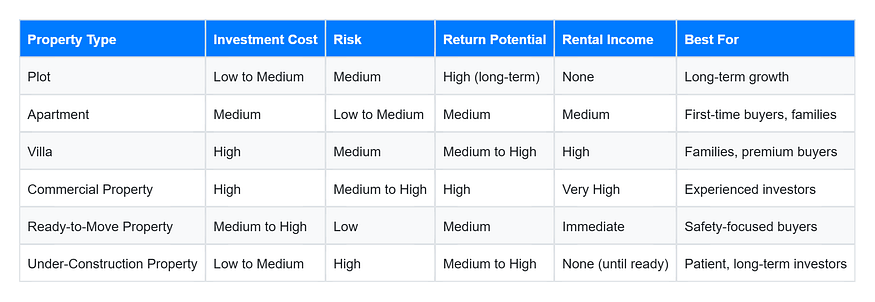
Plots often give the highest growth in value. But plots give no rent. Commercial property often gives the highest rent. But commercial property needs more money and more risk.
Here is a simple comparison:
- Growth in value: Plots and villas in new areas grow the fastest.
- Rental income: Commercial property gives the highest rent. Then villas. Then flats.
- Risk: Under-construction property has more risk. Ready-to-move property has less risk.
- Maintenance: Flats have shared work. Villas and shops need more personal work.
- Investment cost: Plots need less money to start. Villas and shops need more money.
- Long-term growth: Land near a new road or metro line often grows fast.
Reports on the Indian property market say that low interest rates help real estate. More spending by people also helps real estate. Both homes and shops are growing well in 2026. This shows that time and place both matter for good returns.
Comparing Real Estate with Other Investments
Real estate is not always better than stocks or gold. Each one has its own use. Your choice depends on your goal. Your choice also depends on your risk.
Real Estate vs Stocks
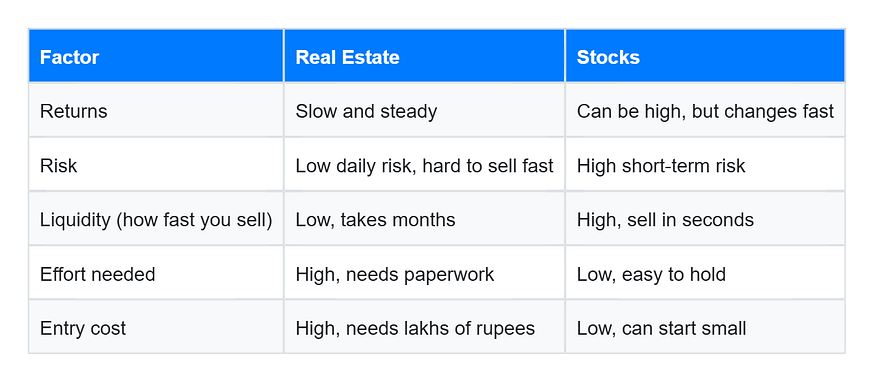
Stocks move up and down fast. This is called volatility. Real estate moves slowly. This feels calm. But stocks can sometimes grow faster over many years.
Real Estate vs Gold
Gold is easy to buy, easy to sell and it is needs no maintenance. Real estate needs paperwork. Real estate takes time to sell. But real estate gives rent. Gold does not give rent.
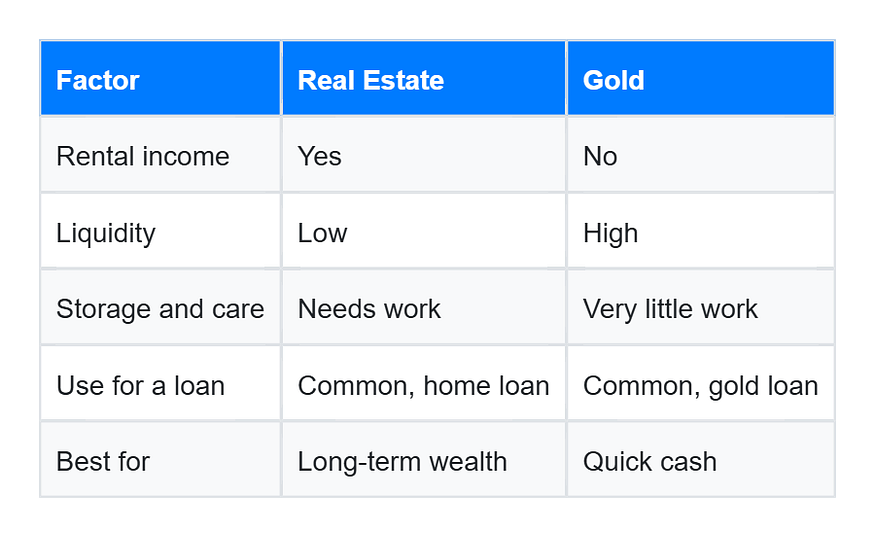
Quick takeaway: Real estate is good for long-term wealth and rent. Gold and stocks are good for quick cash and low effort.
How to Choose the Right Property
Is now a good time to buy property? There is no single answer. It depends on your budget, your loan and your goal.
Check these simple points before you buy:
- Location: Choose a place near schools, hospitals, and transport. Good location helps price grow.
- Budget: Buy only what you can afford. Add loan EMI and repair cost to your budget.
- Builder reputation: Check the builder’s old projects. A good builder finishes work on time.
- Legal documents: Check the ownership papers. Check government approvals. This keeps you safe.
- Infrastructure: New roads and metro lines help nearby property grow.
- Future development: New government projects help price grow faster.
- Rental demand: Check for jobs or colleges nearby. This keeps rent demand strong.
- Connectivity: Easy transport helps both rent and resale price.
Should I buy a house or invest in land? If you want to live in it, buy a house. If you want long-term growth, and can wait, land can work well.
Which is better for investment: plot, villa, or apartment? Plots often win in long-term growth. Villas often win in rent and comfort. Apartments often win in easy buying and selling. Your choice depends on your budget and your time.
Common Mistakes New Investors Should Avoid
Many new investors lose money. This is not because real estate is bad. This is because of small mistakes. Avoid these mistakes:
- Not checking legal papers. Always check ownership first.
- Choosing a low price over a good location. A cheap property in a bad area may not grow.
- Trusting a builder without checking. Always check the builder’s past work first.
- Spending more than your budget. A big loan can cause stress later.
- Expecting fast profit. Real estate needs patience. It is not a fast money plan.
- Not asking an expert. A small fee now can save a big loss later.
Property Type Comparison Table
Conclusion
Real estate can help build wealth. It can give rent. It can protect from inflation. But no single property is best for every person. Plots may suit long-term investors. Villas may suit families. Commercial property may suit people with more money and more risk-taking power.
The best way is simple. Choose property based on your own goal. Do not choose because a friend told you. Check the location, papers and builder first. Check your budget first. A good property, bought at a fair price, can help your family for many years.
Frequently Asked Questions
1. Is real estate a safe investment for beginners?
Yes, real estate is usually safer than stocks. Prices do not change fast. But beginners must still check legal papers. They must check the location. They must check builder history. This keeps them safe.
2. How much money do I need to start investing in real estate?
It depends on the property type. It depends on the city. Plots and small flats need less money. Villas and shops need more money. People often use a home loan for this.
3. What is rental yield, and why does it matter?
Rental yield is the yearly rent compared to the property price. It shows how much income your property gives. It matters, apart from future growth in value.
4. Can NRIs invest in Indian real estate?
Yes, Non-Resident Indians can buy homes in India. They can buy commercial property too. They must follow RBI rules. Many NRIs choose ready-to-move homes to stay safe.
5. Is REIT a good way to invest in real estate without buying property?
Yes, a Real Estate Investment Trust is called REIT. It lets you invest in small units. It is like buying shares. You get real estate returns without full cost.
6. How long should I hold a property investment?
Most experts say they hold real estate for five to ten years. This gives time for prices to grow. Real estate rewards patient investors more.
7. Does location matter more than property type?
Often, yes. A simple flat in a good location can grow well. A costly villa in a poor location may not grow. Location is a strong reason for good growth.
8. Should first-time investors choose residential or commercial property?
Most beginners should start with residential property. It is easy to understand, easy to get a loan for, and easy to rent out. Commercial property suits experienced investors with more money.
Citation Links (References)
- Reserve Bank of India (RBI) — Annual Reports and Housing Price Data
https://www.rbi.org.in/Scripts/AnnualReportMainDisplay.aspx - Ministry of Housing and Urban Affairs, Government of India — RERA information
https://mohua.gov.in/cms/rera.php - Real Estate Regulatory Authority (RERA) — note: RERA is state-wise in India, not one single national portal. Examples:
- Maharashtra (MahaRERA): https://maharera.maharashtra.gov.in/
- Uttar Pradesh (UP RERA): https://www.up-rera.in/
- Karnataka RERA: https://rera.karnataka.gov.in/
- National Association of Realtors (NAR)
https://www.nar.realtor/ - Investopedia — Real Estate Investment Guides
https://www.investopedia.com/terms/r/realestate.asp - World Bank — Housing and Urban Development
https://www.worldbank.org/en/topic/urbandevelopment - OECD — Housing Market Reports
https://www.oecd.org/en/topics/housing.html